

Bad breath: where it comes from and what can be done
Bad breath almost always has a cause that can be found. Here is where it comes from, what you can do at home, when to see a dentist, and how we help.
Bad breath is a common complaint, and a quiet one. Many people sense that something is wrong but do not know why, and feel too embarrassed to say it. There is no need. In most cases the cause is inside the mouth, it is found with one examination, and it can be treated.
What bad breath is
Bad breath is also called halitosis. It is a smell that comes out of the mouth and that other people notice. Often the person does not notice it at all. That is normal — the nose gets used to its own smell and stops registering it.
Almost everyone has it now and then. In the morning, just after waking, it is ordinary. During the night saliva drops and bacteria grow. It passes once you brush.
The problem starts when the smell stays all day, or comes back every day even though you brush properly. Then there is a cause, and the cause is worth finding.
Where it usually comes from
In most cases the cause is inside the mouth. These are the ones we meet most often.
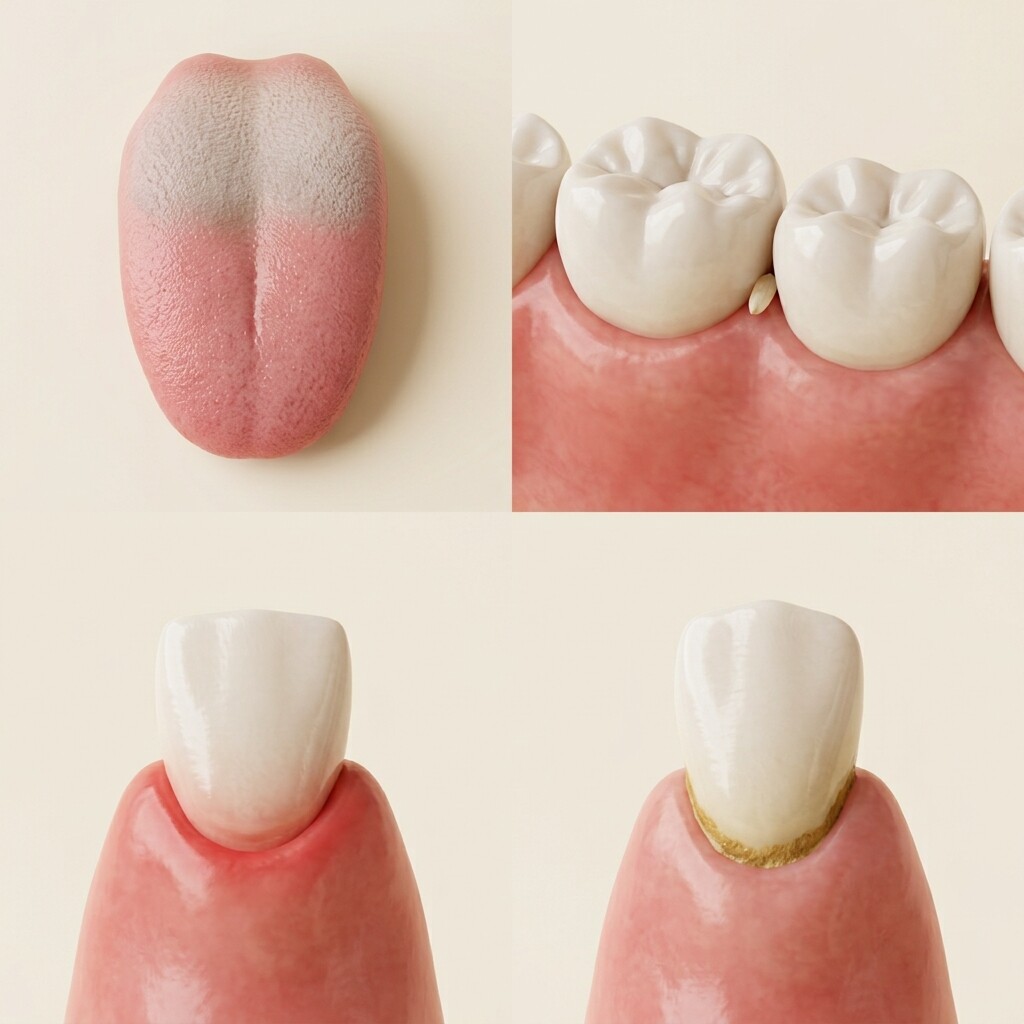
Food left between the teeth
Food that stays between the teeth breaks down. A normal brush does not reach there, however well you brush. That is why dental floss is not a luxury — it is the other half of the same job.
The tongue
The back of the tongue often carries a white coating. A great many bacteria live there. This is one of the most common causes, and the most forgotten.
The gums
When gums turn red, swell, or bleed while you brush, there is inflammation. Inflammation has a smell of its own. The deeper it goes, the stronger it gets.
Hardened plaque
Plaque that is not removed every day hardens into calculus. Its surface is rough and holds bacteria that the brush can no longer touch.
Decayed teeth and old fillings
A hole in a tooth, or a filling that has come out, collects food and bacteria in a place the brush cannot reach.
Dentures
Dentures that are not cleaned every day hold a smell, because the material takes it up over time.
A dry mouth
Saliva cleans the mouth by itself all day long. When there is less of it, the smell grows. The mouth dries during sleep, when we talk a lot, when we drink little water, and with some medicines.
Tobacco, food and drink
Garlic, onion, coffee and alcohol give a smell that passes by itself after a few hours. Tobacco gives a smell that stays, and harms the gums at the same time.
Less often the cause is not in the teeth at all. It can be the tonsils, the nose and sinuses, the stomach or reflux, or a general health condition. These need assessment, and sometimes another doctor.
What you can do at home
These steps are simple and they help most people.
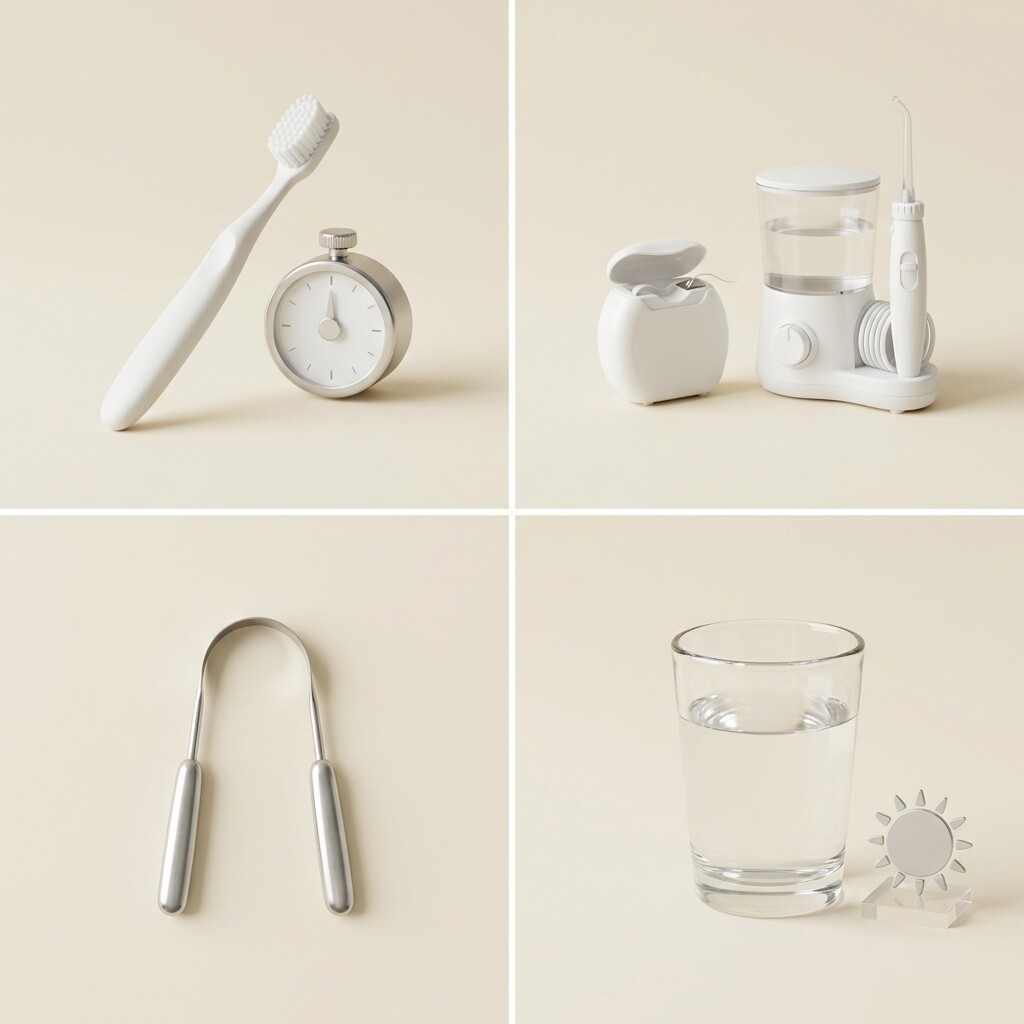
Brush twice a day, three minutes each time. Do not rush. Three minutes is longer than it seems.
Use dental floss once a day. Where the brush does not go, the floss goes. The gums may bleed a little at first; after a few days this usually settles.
A water flosser helps alongside the floss. The jet of water cleans where the brush does not reach, above all around bridges and implants. It does not replace the floss — they work together.
Clean your tongue. Gently, from back to front, with a tongue brush. Do not press hard and do not overdo it.
Drink water through the day. A moist mouth smells less than a dry one.
If you wear a denture, take it out and clean it every day, following the instructions you were given.
Cut down on tobacco. This helps the mouth, and not only the mouth.
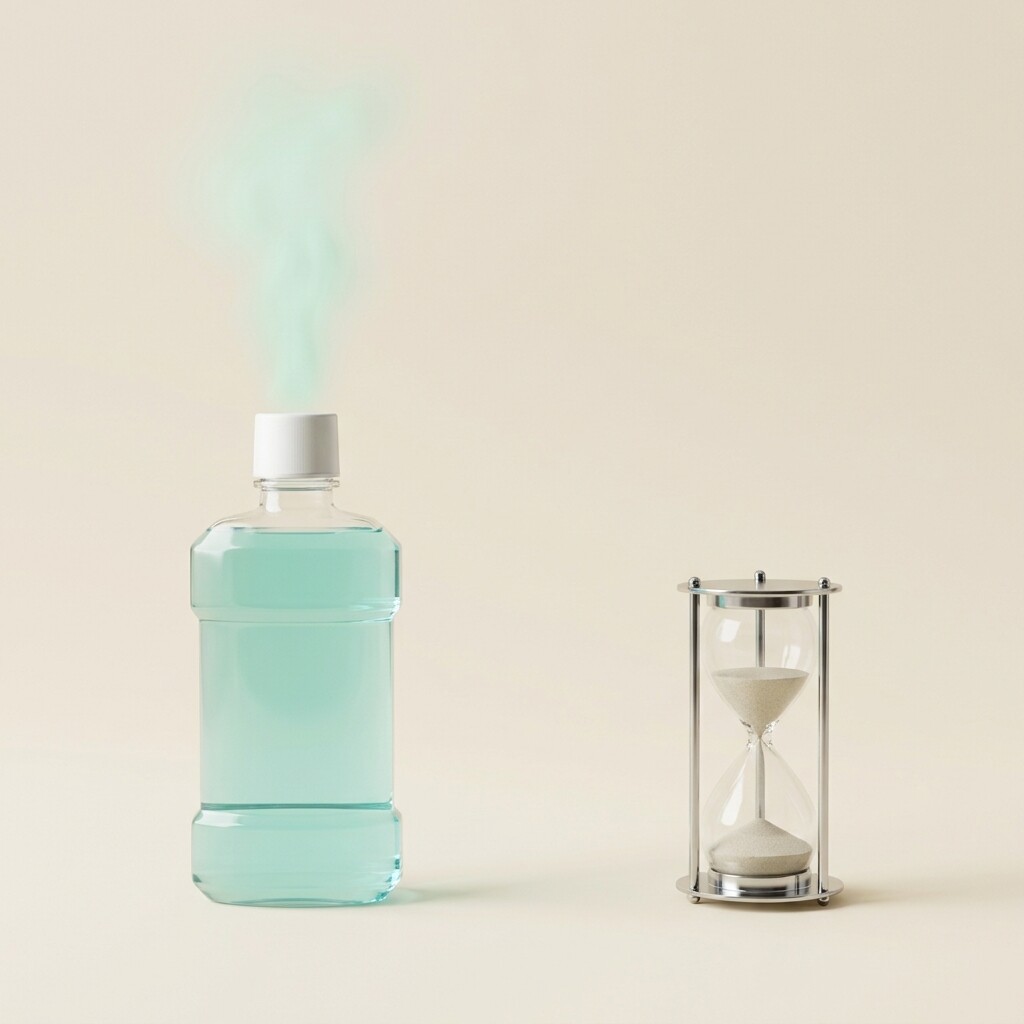
Mouthwashes can cover the smell for an hour or two. They do not remove the cause. Use them as help, not as the answer.
What about probiotics? Some lozenges that dissolve in the mouth contain helpful bacteria (Streptococcus salivarius). The studies are few and small. In one study of 23 people the smell was reduced, but only after the mouth had first been rinsed with chlorhexidine. In another study, without that first rinse, the result was no different from a dummy lozenge. In a 2026 study the probiotic lowered the smell, but only tongue cleaning removed the coating on the tongue; the two together gave the largest reduction. Probiotics may help as an addition, but they do not remove the cause. Ask your dentist before using them.
If after two or three weeks of this nothing changes, the cause needs a closer look.
When to see a dentist
Do not wait long if the smell stays every day even when you brush properly, if your gums bleed, if you have pain, swelling or a bad taste that will not go, if you have a broken tooth or a filling that has come out, if you wear a denture or implants and the smell has changed, or if your mouth is often dry.

Bad breath is rarely only a cosmetic matter. It is often the first sign of something that is easy to treat when caught early, and harder when left.
How our clinic helps
We start with an examination. We look at the teeth, the gums and the tongue, and we ask about daily habits — what you use, how often, and how long you have noticed the smell.
The hygiene visit includes: examination, examination of the gums, removal of hardened plaque with ultrasound, cleaning with bicarbonate, cleaning with glycine, stain removal, polishing, floss and instruction.
It usually takes 30 to 45 minutes and is advised once every 6 months. More often or not is decided by the treating doctor.
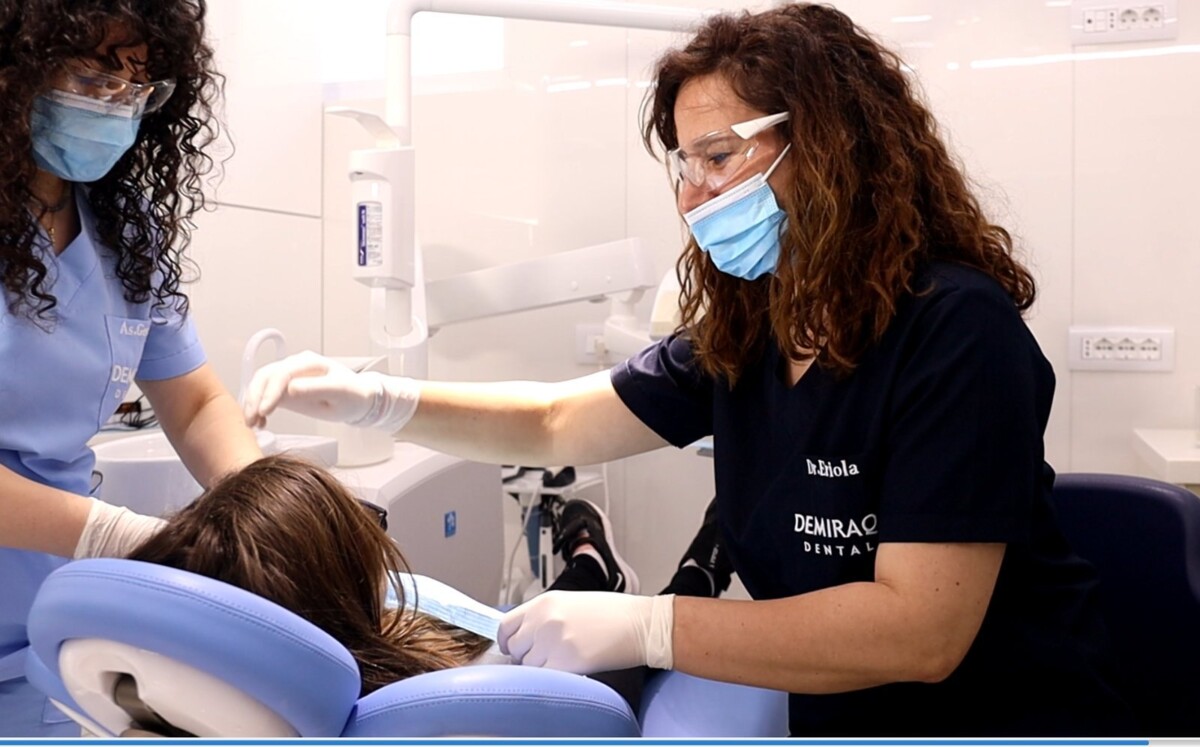
When the reason for the visit is bad breath, we add these as well: we check the tongue, we measure the depth of the gum pockets, we clean dentures, we do a particular cleaning around implants, and we look at the tonsils and the nose.
We suggest the toothpaste, the brush, the tongue brush and the water flosser that suit you. When we suspect the stomach, reflux or another cause, we suggest you go to a gastroenterologist or another specialist. And when it is needed, we ask for laboratory tests on general health, which can affect bad breath.
The aim is the same every time: to find the cause, not to cover the smell.
If it worries you, talk to us
There is no need to feel embarrassed. It is a common complaint, we hear it often, and in most cases there is a simple answer. The first step is just an examination.
Book a visit or write to ask:
[email protected]
+355 67 566 9542
+355 4 2230703